
Every September, communities across the country recognize September as National Preparedness Month, an initiative that encourages people to take steps to prepare for disasters before they happen. Celebrated by the FEMA Ready Campaign, this year’s theme is, “Americans Stand Ready.” According to the campaign, the “theme […]

If a major earthquake struck the Cascadia coast tomorrow, understanding what your community needs to protect first would be far harder during the disaster than with preparation beforehand. Disaster planning, typically, starts by asking where the hazard is. This research asks a different question: What matters […]
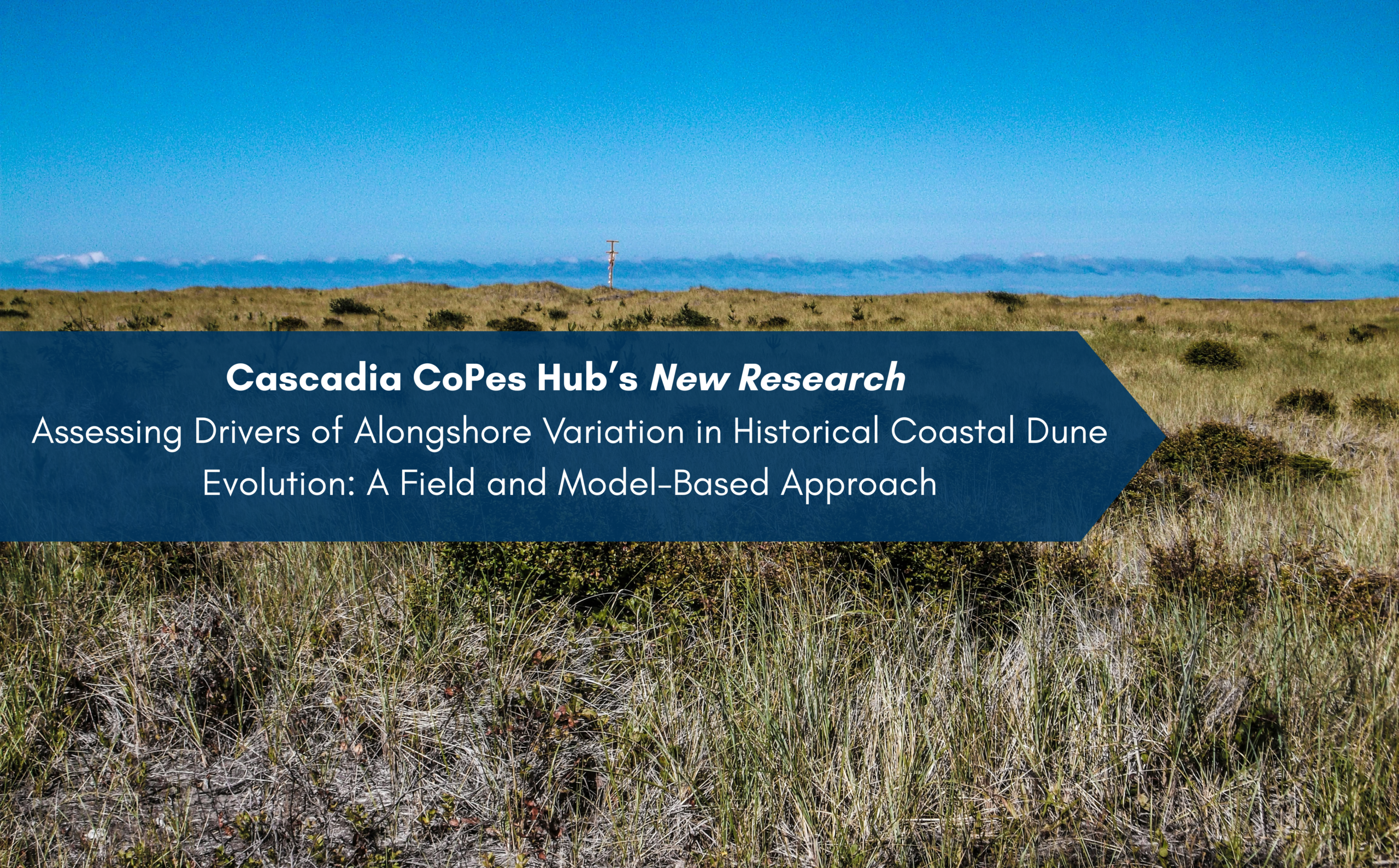
Coastal dunes play a critical role in protecting communities from storms, waves, and coastal flooding. Understanding how these dunes grow and erode helps scientists improve hazard forecasts and eventually coastal resilience. By understanding coastal sand dunes, scientists can optimize nature-based defenses and guide effective restoration for […]

This September, the Cascadia CoPes Hub and CRESCENT are collaborating to bring three sessions on tsunami sources to fruition. Stemming from the Team 1 project, Cascadia Megathrust and Crustal Fault Ground Shaking and Tsunami Simulations, these workshops will discuss the Cascadia CoPes Hub’s megathrust earthquake sources, […]

In Oregon, February marks the beginning of tsunami and earthquake awareness month. Along the Cascadia subduction zone, awareness and preparation of seismic activity are key to keeping communities as safe as possible. This month, we remember the impacts of tsunamis and earthquakes by looking to the […]

Along the Cascadia Subduction Zone, preparedness and understanding are key to being prepared for the potential threats of earthquakes and tsunamis. New research from Cascadia CoPes Hub member Audrey Dunham and colleagues have uncovered that the standard models might be underestimating one hazard while overestimating another. […]

Last week in Marin County, California, significant flooding from heavy rainstorms and king tides impacted the community. On Saturday, Jan. 3rd, the king tide event broke a 27-year-old record across parts of California. With the recent atmospheric river-related damage to Washington state and the record-breaking tides […]

As we head into 2026, it is an important time to reflect on the past year and apply what we have learned. Along the Pacific Northwest (PNW) coast, that means letting go of a few common coastal hazard myths and replacing them with knowledge that helps […]

While much of our winter here in the Pacific Northwest (PNW) has been relatively dry, that has quickly changed due to an atmospheric river coming from the Pacific Ocean. The PNW states, Oregon and Washington, have been experiencing record-breaking rainfalls. Atmospheric rivers typically occur when water […]

We are proud to highlight Kaylee Mackey, a CHARTER research Fellow, for her involvement in the NSF-funded pilot project, “Human drivers of change to sediment supply and the seabed” led by principal investigator Dr. Kendall Valentine. As a part of this project, Mackey is contributing to […]